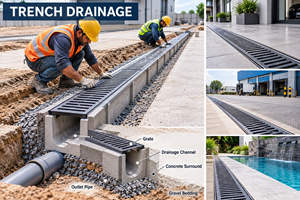
A narrow excavation can carry a major responsibility. Whether the route is intended for drainage or a buried connection, its position, ground conditions and restoration all matter long after the surface has been closed. Understanding how to dig trench safely
Investigating ground conditions
A record of the completed route makes later maintenance and future digging less uncertain. Trench width should provide enough working room for installation without creating unnecessary disturbance.
What to examine first
Before excavation, arrange utility locates and confirm markings on site, using hand exposure or other approved methods where required. This matters because even small oversights can affect the next stage of work. A site-specific review is more reliable than assuming that a familiar method fits every property.
Addressing wet or loose soil
The intended utility determines the alignment, required separation and design depth; these should never be guessed from a general rule. Open excavations should be protected from unauthorized entry, especially when work pauses overnight.
A practical decision point
Excavation walls can fail without warning, so the protective system must reflect soil conditions, depth and applicable safety requirements. This matters because even small oversights can affect the next stage of work. A site-specific review is more reliable than assuming that a familiar method fits every property.
Keeping excavations safe
Before excavation, arrange utility locates and confirm markings on site, using hand exposure or other approved methods where required. A visual inspection of the trench bottom can reveal soft pockets or water before bedding is placed.
Common mistakes to avoid
Water accumulation, traffic loads and spoil piles near an edge can increase the risk of ground movement. This matters because even small oversights can affect the next stage of work. A site-specific review is more reliable than assuming that a familiar method fits every property.
Inspecting before backfill
Excavation walls can fail without warning, so the protective system must reflect soil conditions, depth and applicable safety requirements. Straight routes are not always the best routes when trees, retaining walls or buried services occupy the shortest path.
What to confirm before moving on
Bedding, placement and backfill requirements should follow the utility design and the relevant inspection process. This matters because even small oversights can affect the next stage of work. A site-specific review is more reliable than assuming that a familiar method fits every property.
Measurements and written observations are more useful than assumptions. They help explain why a particular approach was selected and make later maintenance easier.
A walk around the property at different times of day can reveal practical constraints that are easy to miss on a drawing. Access gates, overhead branches, neighbouring activity and surface drainage may all influence the working sequence.
Photographs taken before work begins create a useful reference for later conversations. They can show existing surface conditions, boundaries and features that the project is intended to preserve.
Clear communication between the property owner, designer and field crew is especially important when the plan changes. A small adjustment should be checked against safety, drainage and underground infrastructure rather than treated as an isolated decision.
Restoration expectations should be defined early. A site that is safe for the next construction phase may require a different finish from a yard intended for immediate everyday use.
For dig trench, the right decision depends on the actual property rather than a one-size-fits-all checklist. For dig trench, the right decision depends on the actual property rather than a one-size-fits-all checklist. For dig trench, the right decision depends on the actual property rather than a one-size-fits-all checklist. For dig trench, the right decision depends on the actual property rather than a one-size-fits-all checklist. For dig trench, the right decision depends on the actual property rather than a one-size-fits-all checklist. For dig trench, the right decision depends on the actual property rather than a one-size-fits-all checklist. For dig trench, the right decision depends on the actual property rather than a one-size-fits-all checklist. For dig trench, the right decision depends on the actual property rather than a one-size-fits-all checklist. For dig trench, the right decision depends on the actual property rather than a one-size-fits-all checklist.
Questions Worth Asking Before Work Starts
Ask who is responsible for permits, utility coordination, inspections and restoration. Clarify how unexpected site conditions will be communicated, and keep a written record of important decisions. A useful starting point for regional context is local trenching guidance.
Conclusion
Thoughtful route selection, verified underground information and safe excavation methods turn a simple-looking cut into dependable groundwork. The final inspection and restoration deserve as much attention as the digging itself.