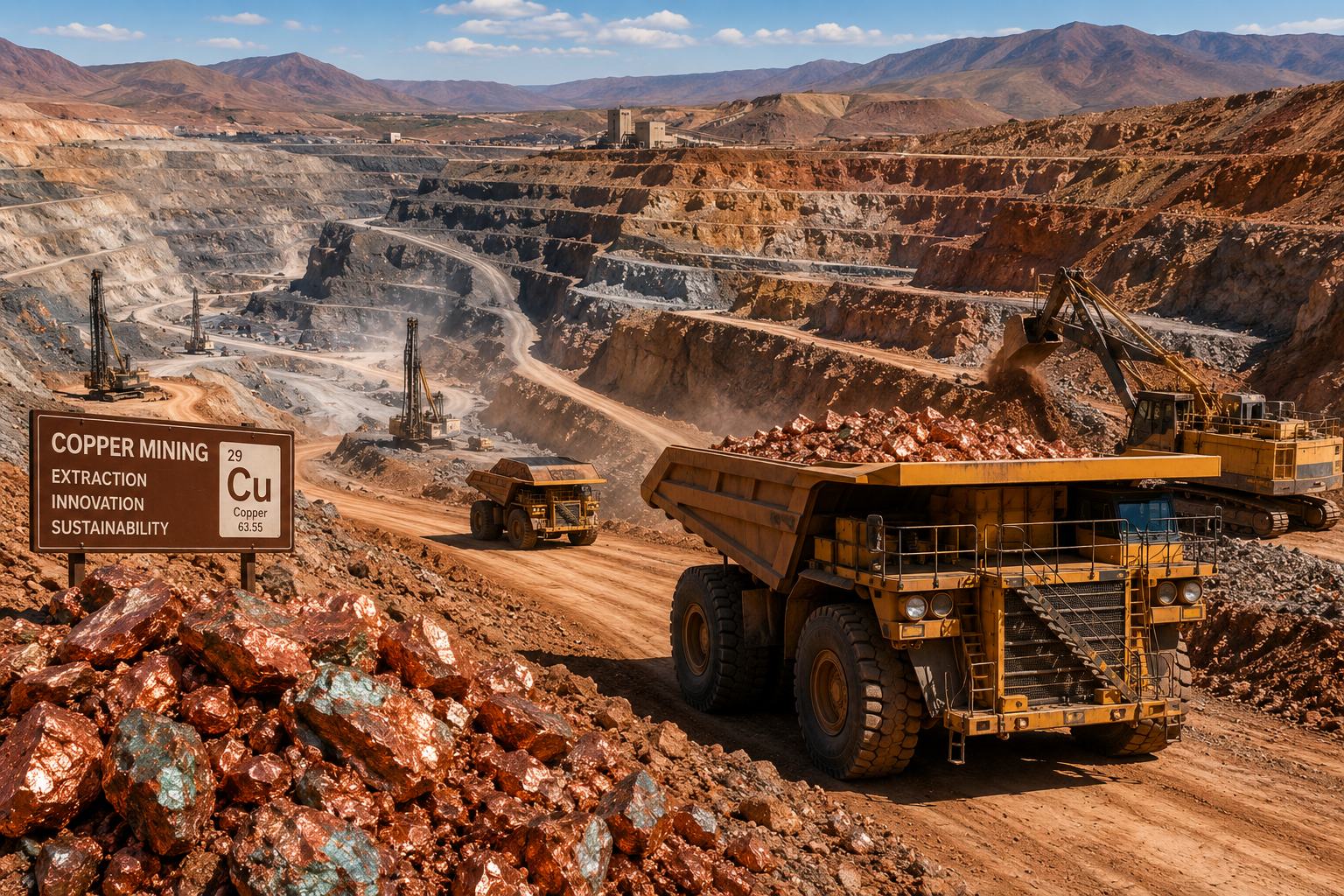
Michigan’s mineral history demonstrates how geological resources can influence regional development over time. Yet future decisions cannot rely on historical experience alone. Changes in scientific knowledge, environmental expectations, and industrial requirements make modern planning increasingly complex. Mining in Michigan offers an opportunity to examine how mineral resource decisions can incorporate geology, technology, community interests, and long-term environmental considerations.
Understanding the Modern Planning Environment
Mineral development begins with understanding the geological setting and the potential significance of a deposit.
However, mineral occurrence does not automatically establish whether extraction is appropriate.
Technical feasibility, environmental requirements, infrastructure availability, and community considerations all influence planning.
The Value of Reliable Geological Information
Geological investigations help identify mineralized formations and understand their characteristics.
Drilling, sampling, and analytical studies contribute information about underground conditions.
Reliable interpretation reduces uncertainty, although no exploration program can eliminate it completely.
Why Regional Conditions Matter
Mining in Michigan must account for geographical and environmental conditions that differ across the state.
The Upper Peninsula contains varied geological formations, extensive forested landscapes, and important freshwater systems.
Weather conditions and seasonal changes may also influence operational planning.
Planning for Northern Climates
Cold temperatures, snowfall, and seasonal precipitation can affect transportation, construction, and water management.
Engineering plans should consider these conditions when evaluating infrastructure and operating procedures.
Site-specific climate information supports more realistic planning assumptions.
Incorporating Environmental Science
Environmental investigations provide information needed to evaluate potential effects on surrounding ecosystems.
Water resources, habitats, soil conditions, and land use patterns may all require study.
The findings help identify sensitive features and possible impact pathways.
Long-Term Monitoring Considerations
Some environmental effects may develop gradually or continue after extraction ends.
Monitoring plans should reflect the characteristics of the site and the risks identified during assessment.
Long-term responsibilities need to be considered before development decisions are finalized.
Technology in Future Mineral Planning
Digital geological models and monitoring systems can support increasingly detailed evaluations.
These technologies allow specialists to organize large quantities of information and compare different development approaches.
Their value depends on the accuracy of the underlying data.
Improving Decision Quality
Modeling tools can help teams evaluate engineering alternatives and potential operational constraints.
However, computerized predictions require verification through field observations and professional judgment.
Technology supports informed decisions but cannot replace sound scientific investigation.
Community Interests and Regional Priorities
Mineral planning affects more than geological resources.
Communities may consider employment possibilities, infrastructure requirements, environmental risks, and long-term land use.
Different groups may place different emphasis on these concerns.
Creating Opportunities for Dialogue
Public participation allows residents and stakeholders to review information and express concerns.
Clear explanations of geological findings, proposed activities, and environmental safeguards can improve understanding.
Constructive dialogue requires acknowledging uncertainty rather than presenting every outcome as predetermined.
Considering the Entire Mining Lifecycle
Responsible planning should address exploration, potential construction, extraction, closure, and post-closure management.
Each stage presents different technical and environmental responsibilities.
Considering the entire lifecycle helps prevent important obligations from being overlooked.
The Importance of Closure Planning
Closure plans evaluate how disturbed areas and remaining infrastructure will be managed.
Water conditions, land stability, and future monitoring requirements may influence the proposed approach.
Planning for these responsibilities early supports more comprehensive project evaluation.
A Balanced Approach to Future Development
Mining in Michigan will continue to involve questions about natural resources and regional priorities.
Scientific investigation can clarify geological opportunities, while environmental assessment helps identify potential consequences.
Community participation contributes additional perspectives that technical studies alone may not capture.
Conclusion
Mining in Michigan reflects an evolving relationship between geological knowledge, technological capability, environmental stewardship, and community decision-making.
Future mineral resource planning benefits from reliable evidence, transparent evaluation, and attention to long-term responsibilities. These principles help ensure that decisions about Michigan’s mineral resources consider both present opportunities and the needs of future generations.