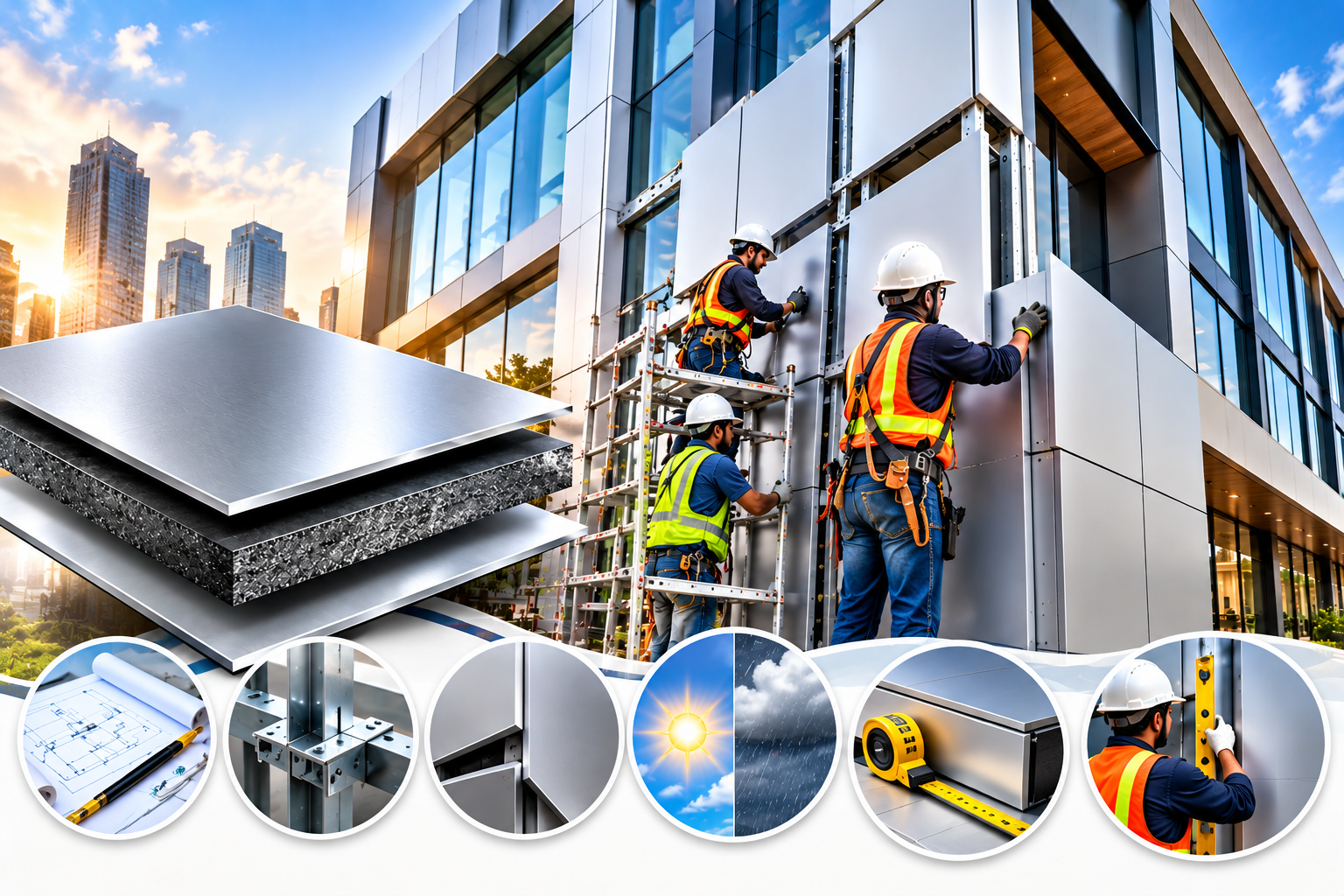
A building facade must continue performing long after construction is complete. Its appearance, structural stability, and resistance to environmental exposure all contribute to the quality of the building envelope.
An acm aluminum composite panel can offer useful architectural characteristics, but its long-term behavior depends on material specification, engineering design, installation quality, and maintenance.
Understanding these factors helps building owners and project teams establish realistic performance expectations.
How Environmental Conditions Affect Cladding
Exterior surfaces experience changing weather conditions throughout the year.
Sunlight, rainfall, wind, and temperature fluctuations can influence both panel finishes and supporting components.
An ACM aluminum composite panel must be specified with these conditions in mind.
Temperature Variation
Aluminum expands when heated and contracts when cooled.
Repeated temperature changes can create movement within a facade assembly.
Appropriate joints and attachment details allow this movement to occur without placing unnecessary stress on the panels.
The required allowances depend on panel dimensions and expected temperature ranges.
The Role of Surface Coatings
The visible finish contributes significantly to long-term architectural appearance.
Exterior coatings can provide protection against environmental exposure while establishing the intended color and texture.
However, different coating systems have different performance characteristics.
An ACM aluminum composite panel should be evaluated using the finish specifications relevant to the project environment.
Color and Appearance Retention
Extended ultraviolet exposure can affect some surface finishes.
Pollution and airborne deposits may also change the apparent appearance of a facade.
Suitable finish selection and periodic cleaning help reduce avoidable deterioration.
Consistent maintenance is particularly important for buildings in heavily polluted environments.
Structural Reliability Over Time
Exterior cladding is exposed to repeated wind forces and thermal movement.
The attachment system must transfer these loads safely to the supporting structure.
An ACM aluminum composite panel should be incorporated into an assembly designed for the expected conditions.
Inspecting Connections
Periodic inspections can help identify loose components, visible deformation, or deterioration around connection points.
The inspection frequency should reflect the building’s exposure, height, accessibility, and maintenance plan.
Qualified professionals should assess any significant structural concerns.
Managing Moisture and Drainage
Water management remains important throughout the service life of a facade.
Rainwater may reach the space behind certain cladding systems, particularly around joints and openings.
The wall assembly must therefore include suitable drainage and moisture-control provisions.
An ACM aluminum composite panel should not be assumed to provide complete weather protection independently of the supporting construction.
Blocked drainage pathways or damaged flashings can affect the overall facade.
Fire-Safety Considerations
Fire performance must be addressed during specification and maintained through any later modifications.
Different composite cores can exhibit different fire behavior.
The complete facade assembly may also require testing or classification under applicable regulations.
Replacement panels and alterations should remain consistent with the approved safety requirements.
Developing a Maintenance Plan
A practical maintenance program should include regular visual inspections and appropriate cleaning.
Building managers should document damaged areas, coating changes, and joint conditions.
Maintenance activities should follow relevant technical instructions.
An ACM aluminum composite panel may offer extended architectural service when properly specified, installed, and maintained, but no single lifespan applies to every project.
Conclusion
The long-term performance of an ACM aluminum composite panel depends on the interaction between material quality, environmental exposure, structural design, and maintenance practices. Surface finishes influence appearance retention, while suitable connections and movement allowances support facade stability. Moisture management and fire-safety compliance are equally important. By establishing clear performance requirements during design and following a consistent inspection strategy after construction, building owners can better protect the architectural appearance and functional integrity of composite cladding systems over time.