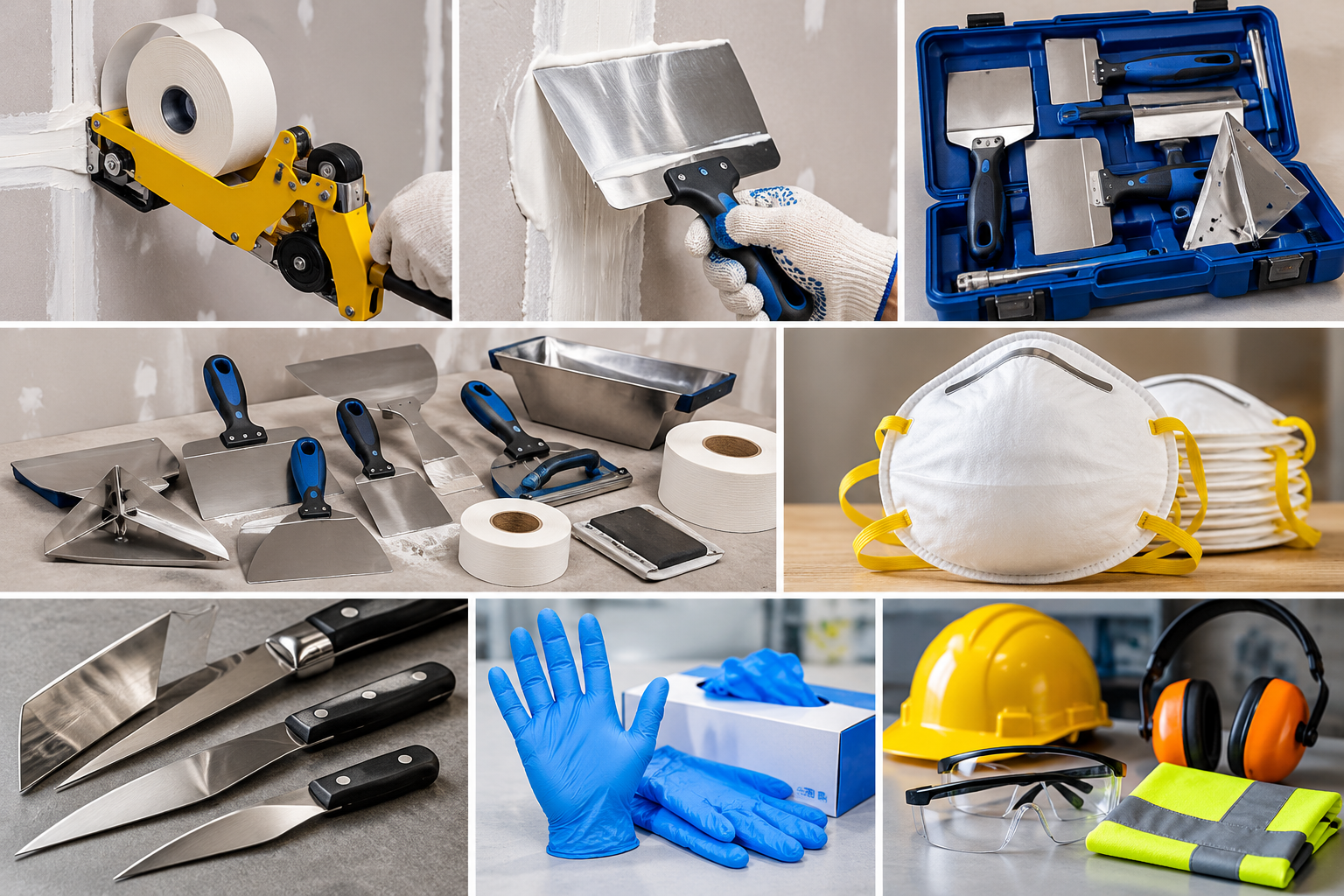
Smooth drywall surfaces depend on accurate compound application, careful edge control, and consistent finishing techniques.
Even small imperfections can become visible after painting, particularly where natural or artificial lighting strikes the wall at an angle.
People searching for a nela stainless steel joint knife canada are typically interested in blade quality, comfortable handling, and the practical advantages of stainless steel finishing tools.
Understanding these characteristics can help drywall workers select suitable equipment for different stages of joint treatment.
Understanding the Role of a Joint Knife
A joint knife is a hand tool used to apply, spread, and smooth joint compound over drywall seams, fasteners, and surface imperfections.
Its flat blade allows workers to control material placement while removing unnecessary buildup.
Joint knives are available in different widths and levels of flexibility.
Why Blade Design Matters
Blade shape influences how compound moves across the drywall surface.
A smooth, properly maintained edge helps distribute material evenly.
Damaged or uneven blades may leave lines that require additional correction.
Advantages of Stainless Steel Construction
Stainless steel is commonly used in finishing tools because of its corrosion resistance and practical maintenance characteristics.
However, material quality and blade design influence performance.
Corrosion Resistance
Drywall finishing involves frequent contact with moisture-containing joint compound.
Stainless steel helps resist corrosion when equipment is properly cleaned and maintained.
It should still be dried and stored appropriately after use.
Consistent Working Edges
A well-manufactured stainless steel blade can provide a smooth working edge.
This helps workers maintain controlled contact with the surface.
Regular inspection is necessary because impacts and improper storage can damage even durable materials.
Choosing the Appropriate Joint Knife Size
Different blade widths serve different finishing purposes.
Narrow Blades
Narrow joint knives are useful for filling small imperfections, covering fastener heads, and working in restricted spaces.
They provide precise material placement where broad coverage is unnecessary.
Medium Blades
Medium-width blades help apply compound across seams and small repairs.
They balance coverage with handling control.
Wide Blades
Wide blades help feather compound over larger areas.
This creates gradual transitions between finished joints and surrounding drywall.
Workers should select the width according to the task rather than assuming a larger blade is always better.
Handle Comfort and Control
A comfortable handle supports consistent application.
Grip shape, surface texture, and balance can influence handling during repeated finishing movements.
Why Grip Stability Matters
A secure grip helps workers maintain blade position and application pressure.
This becomes particularly important when working overhead or finishing detailed areas.
However, workers should avoid gripping the handle excessively tightly, as unnecessary tension may reduce control.
Proper Joint Knife Application Techniques
Prepare the Surface
Inspect the drywall for loose debris, damaged edges, and protruding fasteners.
Correct visible issues before applying compound.
Load the Blade Carefully
Place a manageable amount of compound along the blade edge.
Avoid excessive loading that could create uneven application.
Apply Controlled Pressure
Move the blade smoothly along the joint.
Maintain an appropriate angle to distribute compound evenly.
Feather the Edges
Gradually reduce material thickness toward the surrounding drywall.
This helps minimize visible transitions after painting.
Inspect Between Coats
Allow compound to dry according to its instructions.
Check for ridges, depressions, and other imperfections before proceeding.
Maintaining Stainless Steel Joint Knives
Clean the blade after every use.
Remove remaining compound before it hardens.
Dry the equipment thoroughly and inspect the working edge for damage.
Store the knife where the blade will not contact hard objects.
Avoiding Common Maintenance Mistakes
Do not use excessive force to remove hardened compound.
Avoid striking the blade against hard surfaces.
Replace or repair damaged equipment when its condition interferes with finishing accuracy.
Conclusion
Understanding the characteristics of a nela stainless steel joint knife canada helps drywall workers evaluate blade quality, grip comfort, and application suitability.
Stainless steel construction offers practical maintenance advantages, while correct blade width and handling technique support precise compound application.
By choosing suitable equipment, maintaining clean working edges, and following consistent finishing methods, workers can achieve smoother drywall surfaces and more reliable finishing results.